

WH-questions are an important component of language development and are frequently targeted in speech therapy. Students must learn to answer questions about people, events, locations, and reasons in order to participate in conversations, understand stories, and succeed in academic settings.
References and Resources
Full Transcript of Podcast: Fun Ways to Target WH-Questions
Episode 152 - Fun Ways to Target WH-Questions
Hey there, you are listening to the Speech Space Podcast. I'm your host, Jessica Cassity, and this is episode 152. Today we're going to be talking about WH questions, and if you work with students on any sort of language goals, then there's a very good chance that you spend a lot of time targeting WH questions.
As we know, WH questions are foundational for things like comprehension, conversation, and overall academic success. Students need to be able to answer and ask these questions in order to do things like participate in classroom discussions, follow directions, and understand stories. But let's be honest, targeting WH questions can sometimes start to feel repetitive if we rely on the same question cards or activities.
So today we're going to talk about five fun and engaging ways to target WH questions in speech therapy that keep your students motivated. Before we get started, I did just want to mention that this podcast is brought to you by the Digital SLP, which features time-saving, interactive digital resources that are all teletherapy platform-friendly. You can learn more or sign up by visiting thedigitalslp.com forward slash digital SLP.
Now I touched on this a minute ago, but I wanted to briefly dive a bit deeper. According to ASHA, the ability to answer questions about people, events, locations, and reasons is an important component of both expressive and receptive language development. Students use WH questions to do things like demonstrate comprehension, participate in conversations, explain ideas, understand narratives and informational texts.
Because of this, WH questions show up frequently in IEP goals for students working on language skills. So let's talk about strategy number one, which is to use pictures and hidden objects. So one simple way to make WH question practice more engaging is by using detailed pictures or scenes.
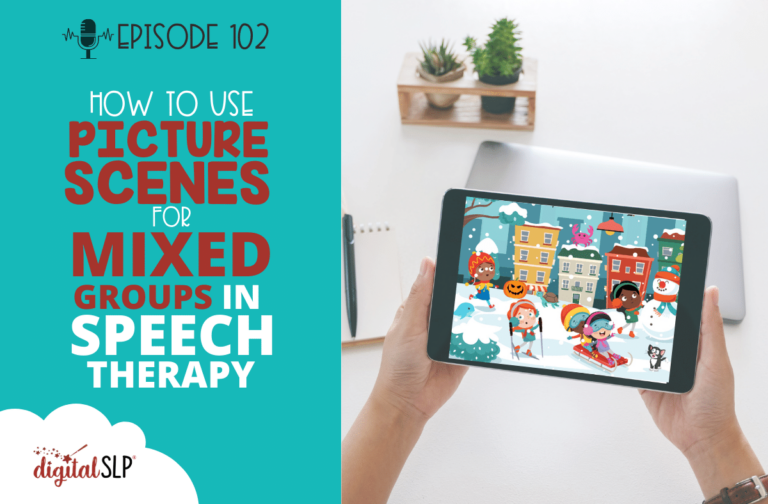
You can show students a busy picture like a playground, a classroom, or a park, and then ask questions like, who is playing on the swing? What is the dog doing? Where is the teacher standing? Or why is the boy holding an umbrella? You can also turn this into a hidden object game where students have to search for something in the picture before answering the question. This works especially well because visual supports help students connect language to context. Now the next strategy is using short videos.
Another fun way to target WH questions is by using short videos. If you've been listening for a while, then you probably know how much I love using videos in speech therapy. And if you are a digital SLP subscriber, then you have had the added perk of receiving my video of the week emails, which are now video of the month emails with seasonal recommendations and other short video clips and how to use them to address a variety of goals in your sessions.
What I suggest doing is watching a short clip with students and then pausing periodically to ask questions like, what just happened? Why did the character do that? Where are they going? Who helped solve the problem? Videos are especially helpful for targeting higher level questions like why and how because they provide a clear sequence of events. They also help students practice listening comprehension and narrative understanding so it touches on multiple objectives at once. And as I mentioned before, I personally love using short video clips in speech therapy sessions because they're so versatile and engaging.
Now the next strategy is to turn it into a game. Games are a great way to increase engagement while working on WH questions. For example, you could do something like a mystery bag, and that's going to be where you place objects into a bag and then you have students ask questions to figure out what's inside.
So the student might ask, what is this used for? Who would use it? Where might you find it? So it's kind of a fun game to keep them on their toes a little bit where they want to understand what's inside the bag, but at the same time, they need to use their WH questions to be able to formulate WH questions to get a better understanding of what is in the bag. Now another option that's fun is question dice. You can roll a die with different WH words written on each side and then have students ask or answer a question using the words that land face up.
Turning question practice into a game, it reduces pressure and it also encourages student participation. Let's move on to strategy number four, which is to use stories, which I think that is always a favorite of SSLP's. We always love using stories in our speech therapy sessions because there's just so many things that we can do with stories.
They are really one of the best contexts for practicing WH questions and after reading a short story or passage, you can ask students questions about the text. Some examples might be, who were the characters? Where does the story take place? What problems came up or why did the character make that choice? You can really adapt your questions based on your students' abilities as well. This helps students connect WH questions to narrative structure and comprehension, which support classroom learning.
You can also have students generate their own questions about the story to work on expressive language skills as well. Now let's move on to strategy number five, which is digital activities. Digital activities can be another helpful tool for targeting WH questions.
Interactive activities often include visuals, movement, and immediate feedback, which can help keep students engaged during your therapy sessions. This is actually one of the areas where the digital SLP subscription can be very helpful. Within that platform, you'll find interactive speech therapy activities that target language goals like WH questions amongst many other skills.
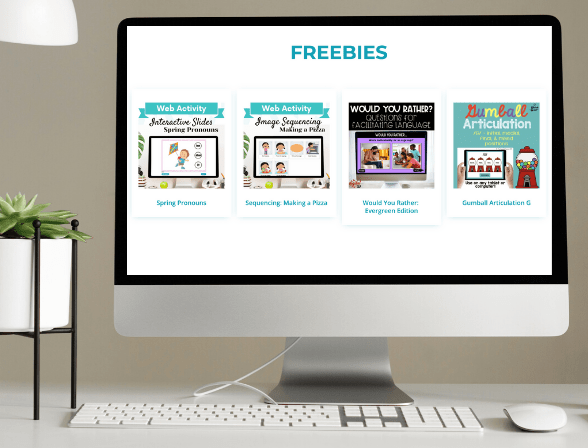
Many clinicians like using digital materials because they are ready to use and easy to adapt for different students. So if you'd like to explore our freebies library, or if you'd like to explore all of the resources by signing up for a free 30-day trial, you can go ahead and check that out over at the digitalslp.com forward slash digital SLP. WH questions are a core part of language development, but therapy does not have to feel repetitive.
By using pictures, videos, games, stories, and interactive activities, you can make WH question practice more engaging and meaningful for students. Sometimes small changes in how we present activities can make a big difference in student participation and learning. Thank you so much for spending part of your day with me.
I am in the process of making a WH question freebie, so if you're not already on the digital SLP newsletter email list, please go ahead and sign up for that. I will make sure to link to that in the show notes for you. If you are looking for ready to use digital speech therapy materials, like I mentioned, you can sign up for a free 30-day trial by heading on over to the digitalslp.com. And if you found this episode helpful, feel free to share it with another SLP who might enjoy these ideas for targeting WH questions in their speech therapy sessions too.
Thanks again for listening.






Recent Comments